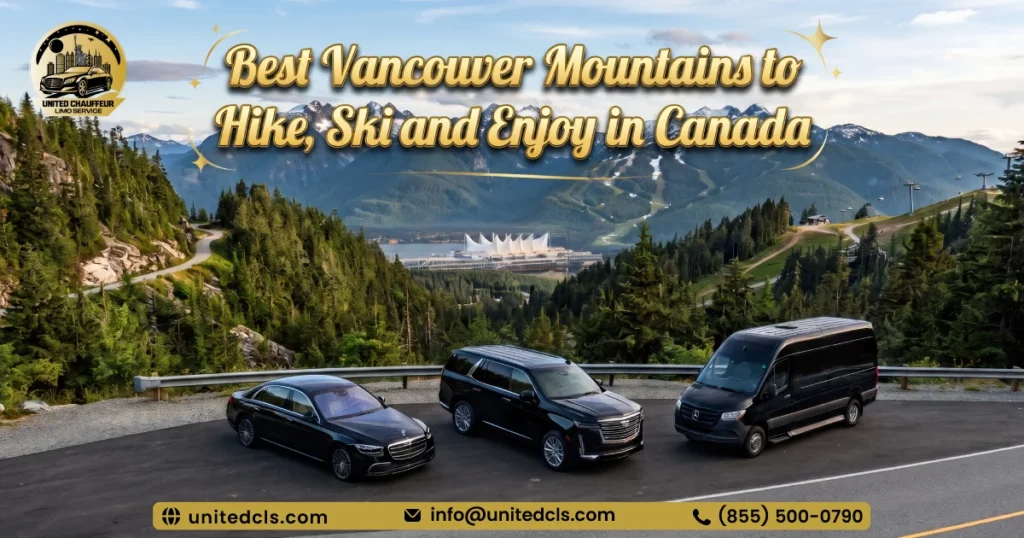
There are very few cities in the world from which a hiker or skier can reach the respective terrains in less than half an hour and Vancouver is one of them. The Coast Mountains loom above the skyline of the city and affect the natural surroundings, climate, and lifestyle of the city as a whole. Vancouverites are able to hike in the morning and be on time for a dinner reservation downtown in the evening; in winter, they can go snowboarding even after work since the slopes are illuminated.
The article provides information about the Vancouver mountains: where they are situated, what types of mountains are hiking-friendly, which mountains are the best for skiing and snowboarding, and how to get to them by car or otherwise. In addition to that, you will find comparison tables, useful tips, safety rules, quick answers and a complete FAQ section at the end of this article. Whether you are visiting Vancouver for the first time or you live there already, the following content will be useful for you.
Vancouver Mountains at a Glance
With the help of this chart, you can choose any Vancouver BC mountains based on distance, season and cost. Prices change frequently, therefore you should verify the new prices on the sites of relevant mountain resorts and BC parks.
| Mountain | From Downtown | Best Season | Approx. Cost (CAD) |
| Grouse Mountain | 20-30 min | Year-round | 60-90 gondola |
| Cypress Mountain | 30 min | Winter | About 100 lift |
| Mount Seymour | 35 min | Winter, summer | Lower lift prices |
| Whistler Blackcomb | 2 hours | Winter, summer | Premium day pass |
| Stawamus Chief | 1 hour | Spring to autumn | Free |
| Garibaldi Lake area | 1.5 hours | July-October | Passes/camping |
| Hollyburn Mountain | 40 min | Summer, snowshoe | Free |
| The Lions | 40 min | Late summer | Free |
| Elfin Lakes | 1.5 hours | Summer, winter | Camping fees |
| Sea to Sky Gondola | 1 hour | Year-round | About 70 |
| Lynn Peak | 25 min | Spring-autumn | Free |
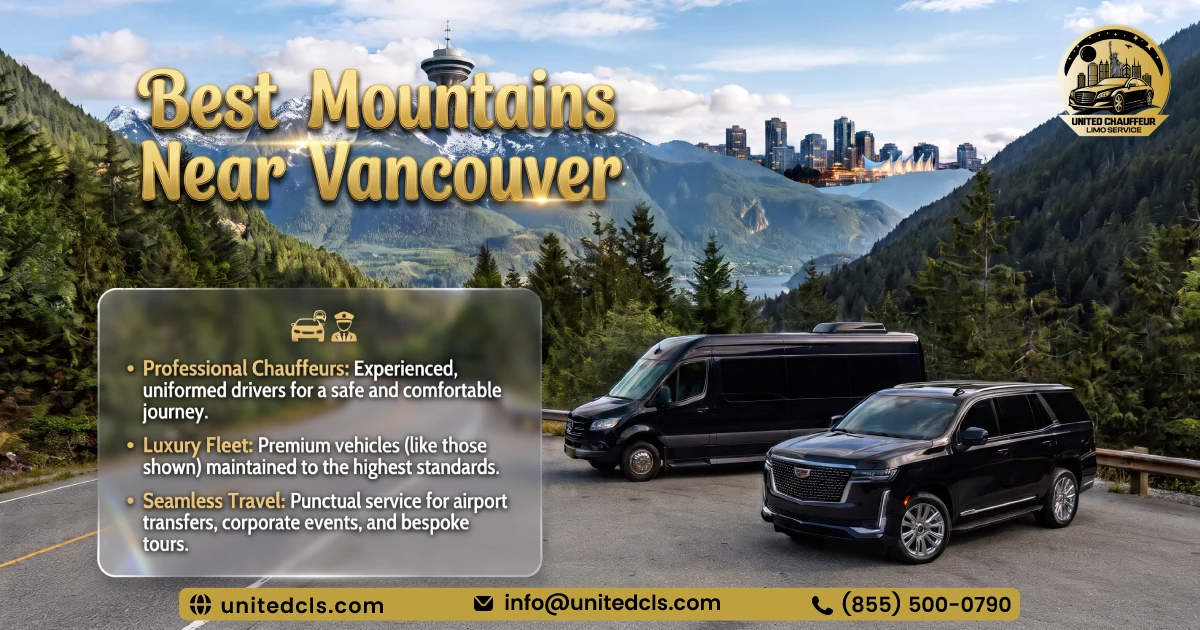
Best Mountains Near Vancouver
From beginner-level slopes to challenging alpine peaks, these twelve locations encompass everything the Greater Vancouver and Sea to Sky region has to offer. Each entry comes with various activities, prices and reasons to go.
1. Grouse Mountain
- Distance: 20 minutes downtown
- Best For: Beginners and tourists
- Season: Year-round activities
- Cost: Roughly CAD 60-90
Grouse Mountain is the nearest of the Vancouver city mountains which can be reached through the Skyride gondola or the Grouse Grind, a steep climb built like a stairway with a distance of 2.9km and an elevation of 850m. A majority of athletic hikers complete the hike in around ninety minutes.
In winters, skiing, snowboarding, night skiing, and snowshoeing take place while summers are reserved for entertainment opportunities including zip-lining, visiting wildlife sites, and lumberjack competitions. Visit Grouse Mountains if you wish to hike, ski, eat, and admire views from one location in Vancouver.
2. Cypress Mountain
- Distance: 30 minutes downtown
- Best For: Skiers and snowshoers
- Season: Winter-focused, summer hikes
- Cost: Tickets around CAD 100
Cypress Mountain was the site of freestyle skiing and snowboarding competitions in the 2010 Winter Olympics and is still the largest ski area in the North Shore, offering downhill runs, terrain park and cross-country ski trails on Hollyburn Ridge.
In summer, Black Mountain Plateau and Hollyburn mountain have forested trails and lakes with stunning views of Howe Sound. Cypress is an excellent place for good skiing, snowshoeing, and great lookout points in the vicinity of Vancouver.
3. Mount Seymour
- Distance: 35 minutes downtown
- Best For: Families and beginners
- Season: Winter and summer
- Cost: Affordable lift tickets
Mount Seymour is considered one of the less costly mountains in Vancouver, Canada, and features a small skiing area which is great for things such as family days, lessons, and tubing. This mountain also has interesting hiking areas such as Dog Mountain and Mystery Lake. Dog Mountain is easy, short, fulfilling, and is usually crowded so it’s good to come to it ahead of time. For skilled tourists, there is an option of continuing towards the peak which is at a height of 1455 m above sea levels but this requires some special equipment.
4. Whistler Blackcomb
- Distance: 2 hours north
- Best For: Advanced skiers
- Season: Winter and summer
- Cost: Premium day tickets
Whistler Blackcomb is the largest ski resort in North America and is one of the best mountain spots in the Vancouver, British Columbia region, it features 8,000 acres of skiable terrain and its two mountain peaks are connected to each other through Peak 2 Peak Gondola, the longest gondola in the world, which is 4.4 km long.
Even though lift ticket prices are up to $250, it is still worth noting that there are a number of attractions, including skiing on glaciers, breathtaking bowls, restaurants in nearby villages, and the possibility of reaching the top of the mountain overnight or making the daily trip along the Sea to Sky Highway in good weather.
5. Stawamus Chief
- Distance: 1 hour north
- Best For: Fit hikers
- Season: Spring to autumn
- Cost: Free trail access
Located at a height of more than 700 meters above Squamish, Stawamus Chief is known for being one of the finest mountain peaks in British Columbia. Hiking on any of the three summits takes about three to five hours, where climbers traverse steep stairs, chains, and ladders.
The stunning views of Howe Sound and Squamish attract many climbers up to the granite cliffs. It is important to start early, to be well-equipped with enough drinking water, and to avoid going on a rainy day as the rocks could be slippery. However, you can also enjoy the beautiful views from the nearby Sea to Sky Gondola.
6. Garibaldi Provincial Park
- Distance: 1.5 hours north
- Best For: Alpine lake lovers
- Season: July to October
- Cost: Check BC Parks passes
Garibaldi Provincial Park is famous for its idyllic turquoise Garibaldi Lake, and breathtaking views of the Panorama Ridge and the iconic Black Tusk volcano. The Garibaldi lake’s trail stretches over approximately 18 km, with an elevation gain of approximately 820 m, while Panorama Ridge makes for a longer trek across steep and rugged terrain.
It is advisable to make reservations beforehand when planning to go camping in the park during summer, since day-use and camping permits are issued by BC Parks. Garibaldi Provincial Park is home to some of the most beautiful and stunning sights and views accessible to the tourists visiting Vancouver, and it is a true paradise for photographers, as well as professional and serious hikers.
7. Hollyburn Mountain
- Distance: 40 minutes downtown
- Best For: Moderate hikers
- Season: Summer, winter snowshoeing
- Cost: Free trail access
Hollyburn Mountain can be reached from the Hollyburn Ridge area of Cypress and has a summit of 1,325 m, which offers a good view of Burrard Inlet, the Gulf Islands and sometimes, if the skies are clear, Vancouver Island to the hiker. The trail is approximately nine kilometers long for a round trip.
Various attractions delight visitors year-round: historic ski cabins, wooded pathways and snowshoe trails. This is a suitable option for moderately fit hikers, who would like to enjoy a half-day hike and impressive views and avoid overcrowded places, being able to do so, especially in the mornings of weekdays outside the peak summer weekends at Grouse.
8. The Lions (Lions Binkert Trail)
- Distance: 40 minutes north
- Best For: Experienced hikers
- Season: Late summer
- Cost: Free trail access
The Lions, a pair of twin peaks near Lions Bay, are some of the best-known mountains you can see from the city. The Lions Binkert Trail is a round trip of about 16 km with an elevation gain of about 1,280 m, culminating at a beautiful saddle beneath the peaks.
This is a long and arduous day visit suitable for experienced hikers who have good navigation skills, sufficient provisions in terms of water, and a reasonable starting time. Snow can last till July, so it is advisable to check the current conditions with the locals.
9. Elfin Lakes
- Distance: 1.5 hours north
- Best For: Overnight adventurers
- Season: Summer and winter
- Cost: Camping fees apply
Elfin Lakes is a 22 km long round trip from Garibaldi Provincial Park in near Squamish. This trail traverses a broad ridge and has backcountry accommodation and campsites. The views of Mamquam Mountain and the volcanic wilderness make every metre of the climb worth it.
The trail is not steep, which makes it ideal for first overnight trips as well as ski touring and snowshoeing. Reservations may be needed for either camping or the shelter, and knowledge of avalanches is very helpful in winter.
10. Sea to Sky Gondola and Mount Habrich
- Distance: 1 hour north
- Best For: Families and sightseers
- Season: Year-round access
- Cost: Roughly CAD 70 tickets
The Sea to Sky Gondola located near Squamish provides riders with a breathtaking view by lifting them 885 meters over Howe Sounds within a span of ten minutes. Tourists arriving at the summit lodge can enjoy the suspension bridge, several viewpoints and an extensive trail system without significant elevation gain.
Also, fit walkers can follow the paths called Mount Habrich and Wonder Loop if they want to put in some effort. This place is a great option for people of different levels of fitness as well as for those looking for something extraordinary even when it rains.
11. Lynn Peak
- Distance: 25 minutes downtown
- Best For: Local day hikers
- Season: Spring to autumn
- Cost: Free access
Lynn Peak, found in Lynn Headwaters Regional Park, is a famous Vancouver mountain site ideal for serene forest hiking, spanning about 7.5 kilometers and involving about 700 meters climbing, thus taking around 3-4 hours of hiking.
One must expect to see many trees at the peak that hide the views, but there are big trees, streams along the way. It may be a good training ground for more advanced hikes, and the Lynn Canyon suspension bridge is there for the family as well.
Best Time to Visit Vancouver Mountains by Season
Different seasons enhance the beauty of the mountains surrounding Vancouver, BC in different ways. Some trails may be closed due to snow, while other times you might meet the crowds and their pets on the way.
-
Summer (June to September)
Summer is an excellent season for hiking. Many high mountain trails are open in July and August after the snow has melted. The days are long, hikers need to start early and expect big traffic on the roads leading to the trails and bring sunscreen and plenty of water.
-
Autumn (October to November)
Fall promises fewer people and gorgeous golden trees but lower temperatures for hiking trips. Rain may be expected more often and in some cases there might be fresh snow that may make it impossible to hike in the high mountains thus a hike at lower elevation would be safer in the fall. Take a rain coat with you, as well as a headlamp to make sure you will manage to hike even after sunset.
-
Winter (December to March)
Winter is a season of skiing, snowboarding, and snowshoeing. Mountains of Grouse, Cypress, and Seymour offer night skiing and are suitable for families. Whistler, on the other hand, has a much bigger area to ski. When heading to the backcountry, find out about avalanche bulletins, put good tires on your car, and be prepared for heavy traffic on mountain roads during the weekends.
-
Spring (April to May)
Spring is between seasons with unpredictable weather conditions. The lower trails dry up, waterfalls are in full flow, and skiing can still be done in the mountains. The mountainous regions can still have massive snow cover, so be sure about the weather conditions before attempting to reach the peak or go for overnight trips.
Hiking Guide by Difficulty
Easy Hikes
If you seek an easy mountain close to you, your easiest bet is Dog Mountain at Seymour, the summit paths of Sea to Sky Gondola and several forest routes within Lynn Canyon. All of these trails are suitable for families and beginners, and for those who want to spend some time in nature without having to deal with difficult trails and long walks.
Moderate Hikes
You can try your hand at Hollyburn Mountain, Lynn Peak and Elfin Lakes. These hikes are longer but manageable. Plan on hiking for three to eight hours, so it would be wise to bring something to eat, a map, your phone fully charged, and extra layers of clothing with you and wear appropriate shoes.
Hard Hikes
Stawamus Chief, Lions Binkert Trail and Panorama Ridge are for really fit people who know the routes and start their hikes early in the morning. Weather conditions above the tree line can change very quickly, so always turn back if things go wrong.
Skiing and Snowboarding Guide
Since the Vancouver BC mountain range is located not far from the city, the distances to three real ski resorts from downtown is about half an hour to an hour.
| Resort | Drive from Vancouver | Best For | Typical Season | Price Level |
| Grouse Mountain | 20-30 min | Night skiing, beginners, views | Dec-Apr | Medium |
| Cypress Mountain | 30 min | Terrain variety, snowshoeing, Nordic | Dec-Apr | Medium-high |
| Mount Seymour | 35 min | Families, lessons, tubing | Dec-Apr | Lower |
| Whistler Blackcomb | 2 hours | Expert terrain, glacier skiing | Nov-May | High |
| Mount Baker | 2 hours | Powder, backcountry | Nov-Apr | Medium |
For beginners, Seymour or Grouse is the best option. Those who possess intermediate skiing skills can visit Cypress, while those who are experts should opt for Whistler. Each of the resorts provides good rentals and lessons, and booking early over the internet tends to cost less.
Other Outdoor Activities on the Mountains
Hiking and skiing are only part of the picture, as these mountains are home to biking, animal watching, tenting, enjoying stunning views, and taking photographs all year round. Below are six other ways to take full advantage of them:
- Snowshoeing: There are great marked routes at Cypress, Seymour and Grouse, making this winter sport very accessible to people of all ages.
- Mountain biking: North Shore is a famous birthplace of freeriding, where you can take advantage of such trails as the ones at Seymour and Whistler Bike Park.
- Animal watching: Black bears, deer, and eagles, as well as rescued grizzlies in Grouse’s sanctuary are all part of the experience.
- Tent camping: Garibaldi Provincial Park and Alice Lake located not far from Squamish offer backcountry and frontcountry camping.
- Gondola sightseeing: Grouse Skyride, Sea to Sky Gondola and Whistler’s Peak 2 Peak give you a chance to admire mountain views without the need to walk.
- Photographing: Sunrise at Quarry Rock and sunset at Cypress Lookout are very attractive sites for all landscape photographers.
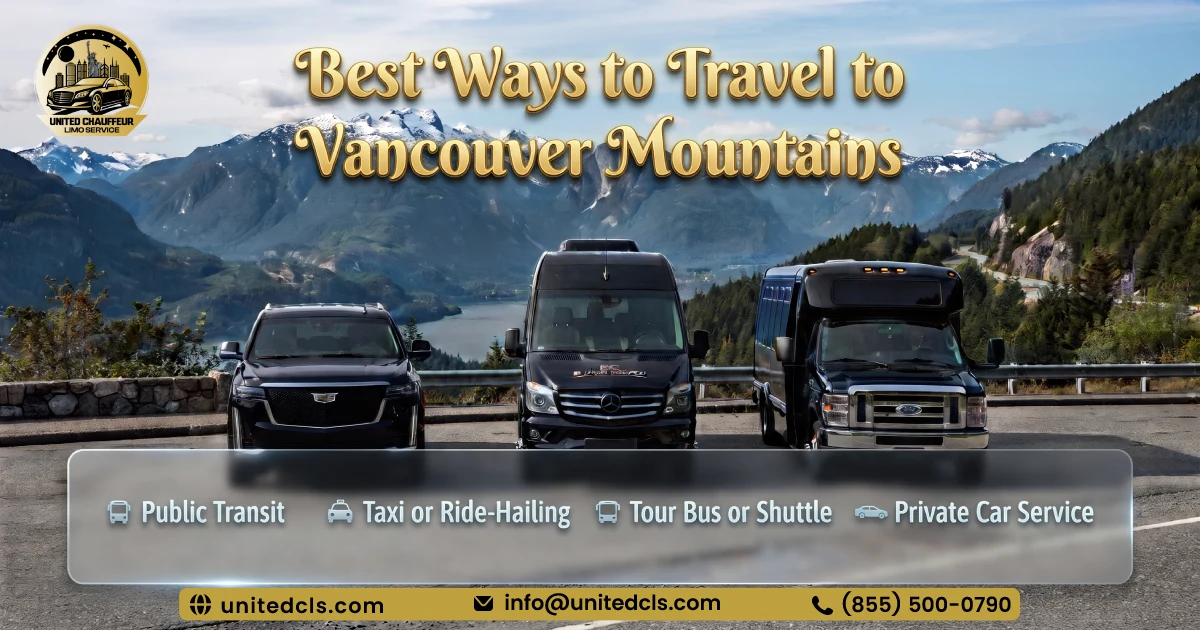
Best Ways to Travel to Vancouver Mountains
If you are looking for mountains in my vicinity, bear in mind that getting to the mountain is half the battle. However, making the wrong choice can lead to wastage of time. Thus, here are five popular mountains with the fair disadvantages of each one.
1. Public Transit
TransLink buses and the SeaBus reach some North Shore trailheads, but transfers are slow, schedules are limited and winter weather causes delays. Carrying skis, boots and wet gear is uncomfortable, and reaching Squamish or Whistler this way is impractical for most travellers.
2. Rental Car
A rental gives freedom, yet mountain roads need winter tires or chains, parking lots fill early, and snow can make unfamiliar switchbacks stressful. You also pay for fuel, insurance and parking and the driver misses the views and the après-ski drink.
3. Taxi or Ride-Hailing
Taxis and apps work for short trips, but fares climb sharply for mountain distances and Whistler runs. Returning from remote trailheads is the real problem, since signal is weak, drivers are scarce, and you can be stranded after a long hike.
4. Tour Bus or Shuttle
Group shuttles reduce driving stress, but fixed departure times control your day. Pickup points may be far from your hotel, stops are shared with strangers, and weather delays or crowded seating can shorten the time you actually spend on the mountain.
5. Private Car Service (United CLS) – Best Option
A chauffeured private car service such as United CLS removes parking, driving and weather stress. You travel door to door in comfort, store ski gear safely, set your own schedule and arrive relaxed, making it the smartest choice for most visitors and groups.
Why Private Car Service Is the Best Option
For mountain days, a professional chauffeur solves the biggest problems of every other transport method. You get a safer, calmer and more flexible trip from your hotel or airport to the trailhead or resort.
- Door-to-door pickup: collected from YVR, your hotel or home, with no transfers or long walks while carrying gear.
- Experienced mountain drivers: professional chauffeurs handle steep, winding and snowy roads far more calmly than unfamiliar visitors.
- Flexible schedule: leave when you are ready, add scenic stops and return after sunset without worrying about bus timetables.
- Space for gear: skis, snowboards, backpacks and luggage travel safely and comfortably inside a clean, spacious vehicle.
- No parking stress: skip crowded lots, paid parking and early-morning queues at popular trailheads and resort entrances.
- Ideal for groups: families and friends share one vehicle, save time, and everyone enjoys the scenery together.
Vehicles for Your Vancouver Mountain Trip
United CLS matches vehicles to your group, whether you want luxury transportation to Vancouver mountains, a private car service to Vancouver mountains for a couple, or limo service to Vancouver mountains for a celebration. Choose from six vehicle types below.
Luxury Sedan
A luxury sedan suits couples and solo travellers heading to Grouse or Cypress. A private car service to Vancouver mountains with leather seating, quiet cabins and smooth mountain driving, with space for light luggage, a small ski bag and hiking backpacks.
Premium SUV
A premium SUV handles snowy mountain roads with confidence and extra ground clearance. It is ideal for small families or friends carrying skis, snowboards and boots to Whistler, Seymour or Squamish trailheads.
Stretch Limousine
A stretch limousine turns the trip into part of the celebration for birthdays, bachelor parties or corporate groups. Enjoy comfortable seating, ambient lighting and room to relax between the city and the resort.
Executive Van
An executive sprinter van carries larger groups together with their ski gear and luggage. It works well with luxury transportation to Vancouver mountains for family reunions, guided hiking days and team outings to Garibaldi, Squamish or Whistler.
Mini Coach
A mini coach is the practical choice for tour groups, school trips and corporate events. Everyone travels in one vehicle with reclining seats, luggage storage and a professional driver managing the mountain route.
Tailored Vehicle Match
Need Vancouver mountain transportation near me for bigger groups? Share your group size, gear and schedule, and the team will suggest the most suitable vehicle, whether for a sunrise hike, a ski weekend or a full day of mountain tours.
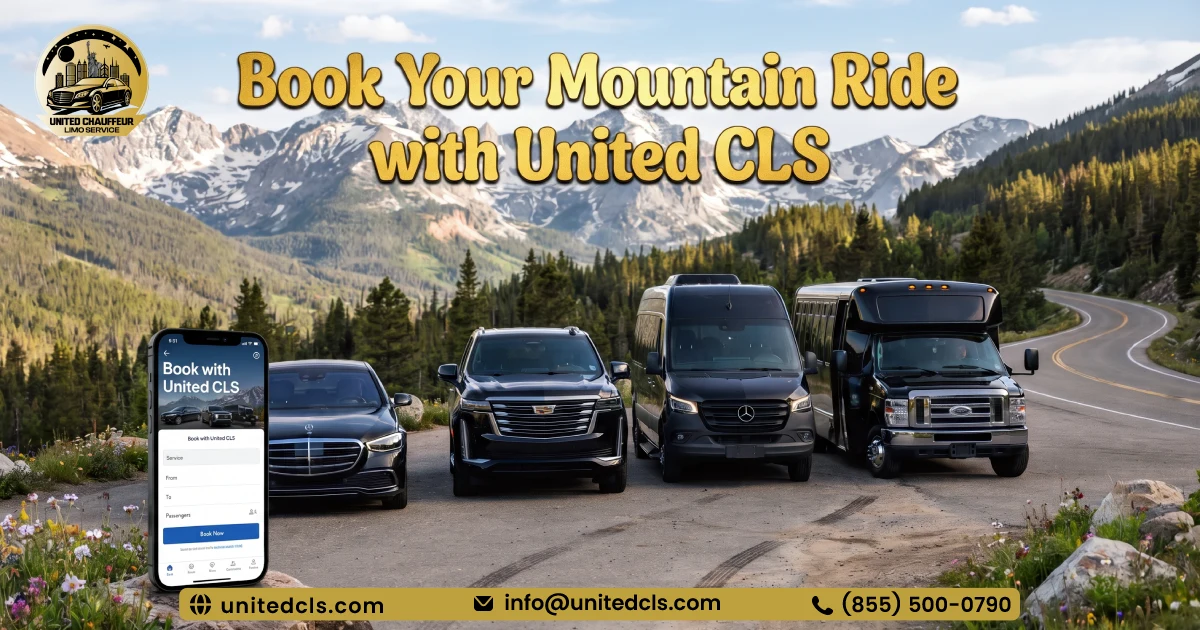
Book Your Mountain Ride with United CLS
Looking for a Vancouver mountains limo service near me? United CLS offers reliable Vancouver mountains transportation for hikers, skiers and sightseers, plus Vancouver mountain tours transportation for groups. Here is what you can expect when you book a ride with us today.
- Airport pickup: meet your chauffeur at YVR and leave immediately.
- Hotel pickup: board at your downtown hotel and avoid parking and transfers.
- Ski gear space: skis, snowboards and boots travel safely in the vehicle.
- Flexible timing: leave at sunrise or return after dinner at your pace.
- Group-friendly: share one vehicle for hikes, tours, weddings or corporate outings.
- Easy booking: send your pickup point, date and group size to reserve.
Safety Tips and What to Pack
North Shore Search and Rescue responds to many calls each year, usually for people who started late, wore the wrong shoes or left marked trails. Mountain weather changes quickly, so even a short hike needs preparation.
Safety checklist
- Check the weather and trail conditions on official websites before you leave.
- Start early and be off the mountain before dark.
- Tell someone your route and return time.
- Stay on marked trails and respect closures.
- Carry a charged phone, but do not rely on signals.
- Keep a safe distance from wildlife, especially bears, and carry bear spray on backcountry trails if you know how to use it.
- Learn avalanche safety before entering winter backcountry terrain.
- Turn back if conditions worsen. The summit will still be there tomorrow.
What to pack
- Sturdy hiking shoes or boots with good grip
- Layers: base layer, warm mid layer and a waterproof jacket
- Water (at least one litre per person) and snacks
- Headlamp, first-aid kit and map or offline GPS
- Sunscreen, hat and sunglasses
- In winter: snowshoes, gloves, goggles and spare socks
Sample Itineraries
These sample itineraries help you turn the mountain options above into a clear plan, whether you have one day, a family weekend, three days or a full week to explore.
One Day: First-Time Visitor
Grouse Mountain is the easiest single-day choice, combining gondola views, wildlife and easy trails close to the city. You can return downtown for dinner without rushing or needing gear.
- Morning: take the bus to Grouse Mountain and ride the Skyride gondola to the summit.
- Midday: visit the wildlife refuge, then enjoy lunch with a panoramic view over Vancouver.
- Afternoon: walk the easier trails near the top, then return to the city for dinner.
Two Days: Family Weekend
A family weekend works best with short, gentle activities and plenty of breaks. Mount Seymour and Grouse Mountain are close to the city, easy to reach and suitable for children.
- Saturday: spend the day at Mount Seymour for snowshoeing in winter or an easy trail.
- Sunday: head to Grouse Mountain for the gondola ride, the bears and wide city views.
- Tip: bring snacks, warm layers and spare clothes, because mountain weather changes quickly for children.
Three Days: Hiking and Skiing Mix
This plan balances easy trails, a classic Sea to Sky hike and a resort day. Use a car or private transfer, because Highway 99 connects every stop efficiently.
- Day 1: hike Quarry Rock in the morning and Dog Mountain in the afternoon.
- Day 2: drive Highway 99, hike the Chief and ride the Sea to Sky Gondola.
- Day 3: ski Whistler in winter, or lift-accessed hiking and Peak 2 Peak in summer.
One Week: Relaxed Explorer
A full week lets you combine North Shore day trips with Squamish, Garibaldi and Whistler at a relaxed pace. Rest days and weather buffers keep the schedule realistic.
- Days 1-2: explore Grouse, Quarry Rock and Dog Mountain, then ski or hike Cypress.
- Days 3-4: base in Squamish for the Chief, the gondola and a Garibaldi Lake hike.
- Days 5-7: visit Whistler, then enjoy a free day at Deep Cove and Cypress Falls.
Frequently Asked Questions
Which Vancouver mountain is best for skiing?
Whistler Blackcomb is the best for terrain, while Cypress is the strongest local option. Seymour is best for families and budgets, and Grouse is ideal for night skiing close to downtown.
Can you ski and hike on the same mountain in Vancouver?
Yes. Grouse, Cypress, Seymour and Whistler all offer snow sports in winter and hiking in summer, so one destination can serve both seasons.
Is the Grouse Grind difficult?
It is short but steep, with about 850 m of elevation gain over 2.9 km. Fit beginners can complete it with rests, but it is demanding and often crowded.
Do you need a permit to hike near Vancouver?
Most local trails are free, but some BC Parks areas, such as parts of Garibaldi, require day-use passes or camping reservations during busy seasons. Always check official pages.
Can you reach the mountains by public transit?
Some, like Grouse and Seymour, have limited bus or shuttle options, but travel is slower and less flexible. Remote areas such as Squamish and Whistler are easier by private transport.
What is the best month to hike in Vancouver?
July to September is best for alpine trails, while May, June and October suit lower-elevation hikes with fewer crowds.
Final Thoughts
From Grouse and Cypress to Whistler, Squamish and Garibaldi, Vancouver offers mountain experiences for every skill level and season. Plan your dates, check conditions, pack carefully and choose comfortable transport such as United CLS then enjoy the best of Canada’s Pacific mountains. Do not confuse these city peaks with Mount Vancouver, a 4,812 m giant in Yukon’s Kluane National Park on the Alaska border.